
💡 Key Takeaways (Quick Summary):
The Ideal Window: The most recommended age to start formal Quran lessons, such as learning the Arabic alphabet and Noorani Qaida, is between 4 and 6 years old.
Early Exposure: Informal learning can begin during infancy through passive listening to short Surahs and daily Duas.
Structured Hifz: Formal Quran memorization (Hifz) yields the best results when started between the ages of 6 and 8.
Developmental Readiness: A child’s cognitive and emotional readiness is more important than a strict chronological age; learning should always be engaging and pressure-free.
Table of Contents
ToggleDeciding What Age to Start Quran Lessons for Your Child
If you are wondering what age to start quran lessons, there is no single mandatory age to begin, but the ideal window is between 4 and 6 years old.
As a parent, you want to instill a deep love for the Book of Allah in your child’s heart, but pushing them too early or waiting too long can be a concern. At this stage, children easily grasp the Arabic alphabet and Noorani Qaida, while structured memorization (Hifz) typically begins around ages 6 to 8.
Understanding Developmental Stages for Quran Learning
Every child matures at a unique pace. Aligning your teaching methods with your child’s cognitive developmental stages ensures that learning the Quran remains a joyful experience rather than a chore.
Ages 2 to 4 (Informal Exposure and Listening)
During the toddler years, children are like sponges, effortlessly absorbing sounds and languages. At this stage, learning should be completely informal and auditory. Focus on playing Quranic audio in the background while they play. You can encourage them to repeat simple daily Duas and short Surahs (like Surah Al-Fatiha or Al-Ikhlas). Nursery-style alphabet chants can also introduce them to the sounds of Arabic letters as soon as they start talking.
Ages 5 to 6 (Letter Recognition and Noorani Qaida)
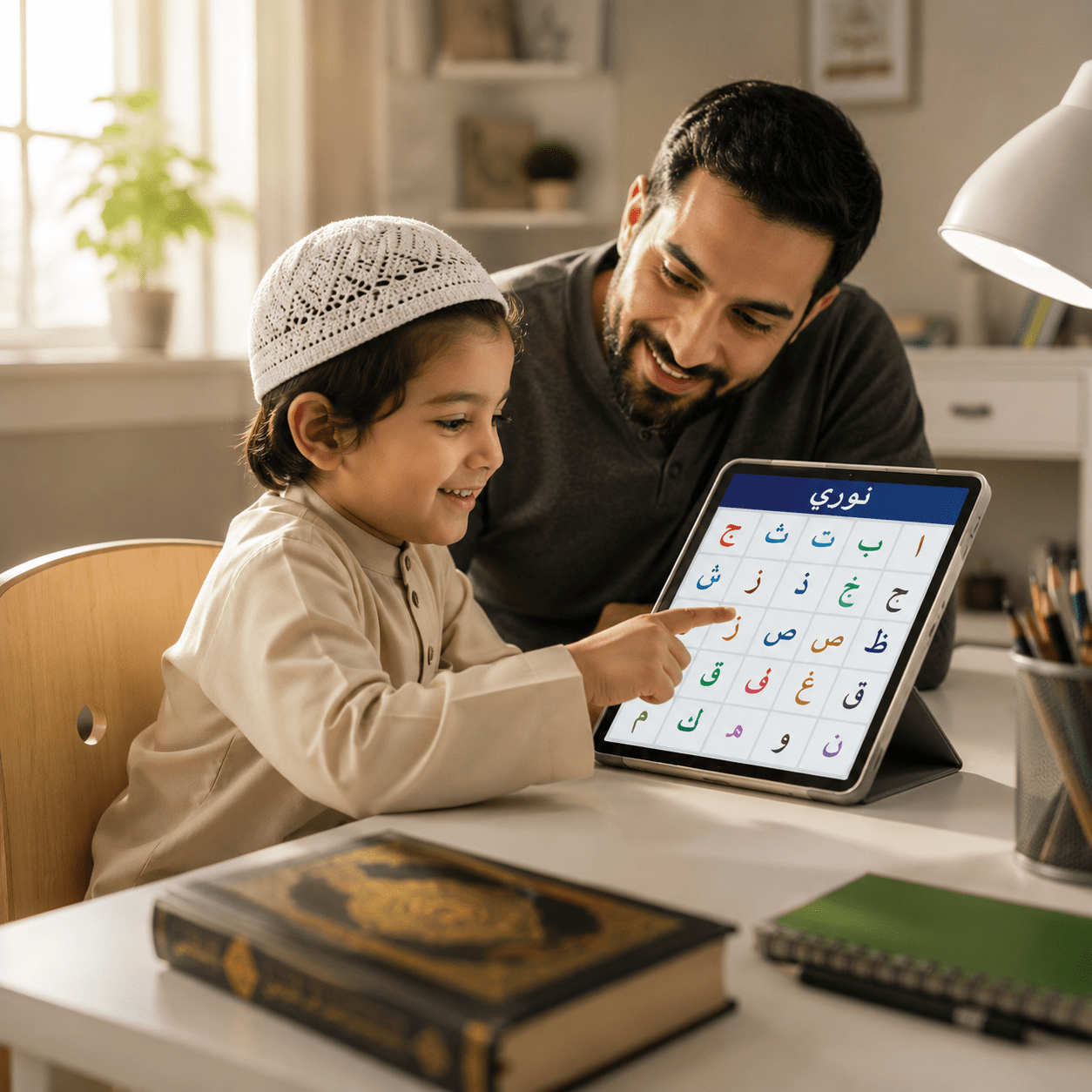
This is the golden age to transition into formal learning. Children at this stage have developed enough motor skills and cognitive focus to sit for short, interactive lessons. Begin by introducing introductory booklets like the Noorani Qaida. The goal here is phonetic recognition—teaching them how individual Arabic letters sound and how simple vowels (Harakat) change those sounds. Keep lessons short, around 15 to 20 minutes, to maintain their attention span.
Ages 7 to 9 (Reading, Recitation, and Tajweed)
By the age of seven, a child’s attention span has significantly expanded. This is the traditional age to introduce proper pronunciation and the foundational rules of Tajweed. Children can now transition from reading isolated words to reading full verses fluidly. This is also the perfect time to begin light, structured memorization (Hifz). They can handle a consistent daily schedule, making it easier to track their progress.
Ages 10+ (Mastery, Tafseer, and Rigorous Hifz)
Pre-teens and teenagers possess advanced cognitive reasoning. They are ready to handle rigorous memorization schedules and deeper conceptual studies. At this stage, you can introduce Tafseer (the meaning and context of the verses). Understanding the stories and lessons behind the Surahs keeps older children spiritually engaged and connected to the text.
The 7-7-7 Rule in Islam and Child Development
When discussing education, many scholars reference the famous Islamic parenting principle regarding the stages of raising a child. The rule suggests: play with them for the first seven years, teach and discipline them for the next seven, and befriend them for the following seven. Applying this to quran for kids, the first seven years should be filled with playful, pressure-free exposure. The subsequent seven years (ages 7 to 14) are when structured discipline, Tajweed rules, and a dedicated timetable for quran memorization should be firmly established.
How to Transition Your Child into Structured Quran Classes
Transitioning from casual listening at home to formal education requires a strategic approach. Follow this actionable framework to ensure a smooth journey.
Step 1: Create an Islamic Environment at Home
Before booking formal lessons, make the Quran a natural part of your daily household routine. Recite aloud yourself, play beautiful recitations on the TV, and normalize talking about Allah and the Prophets.
Step 2: Introduce the Basics Playfully
Use visual aids, flashcards, and interactive games to teach the Arabic alphabet. Do not rush into complex words until they have completely mastered letter recognition through tools like the Noorani Qaida.
Step 3: Establish a Consistent Routine
Consistency beats intensity. Set a specific time every day for Quran practice. A well-structured, 20-minute daily habit is far more effective than a grueling two-hour session once a week.
Step 4: Enroll in Professional Online Classes
Once your child is ready for structured learning (around age 5 or 6), partner with expert educators. Certified tutors know how to keep young learners engaged, correct their Makharij (pronunciation) early on, and apply positive reinforcement.
Step 5: Prioritize Tajweed Over Speed
Many parents rush to see their child finish the Quran (Khatam). However, reading slowly with immaculate Tajweed is infinitely better than reading fast with severe mistakes. Instruct your child’s tutor to focus heavily on pronunciation during the first year.
Step 6: Implement a Reward System
Create a visual tracking chart on your fridge. Every time your child completes a Surah or a Qaida lesson, reward them with a sticker. A specific amount of stickers should lead to a tangible reward, linking their Quranic milestones with joy and celebration.
## Overcoming Challenges for English-Speaking Families in the West
For Muslim families residing in the USA, UK, Canada, or Australia, raising a child connected to the Quran presents unique challenges that require specific solutions.
### The Language Barrier
Most children in these regions speak English as their first language, making Arabic letters feel foreign. It is vital to expose them to the Arabic alphabet early on, so the phonetic sounds (Makharij) become natural to their vocal cords before their primary language entirely takes over.
### Screen Time vs. Learning Time
With the abundance of digital entertainment, sitting down with a traditional Mushaf can seem less appealing. The solution is to utilize screens wisely. Modern online learning platforms use interactive whiteboards and animated Noorani Qaida lessons to capture a child’s attention seamlessly.
### Finding Qualified Local Tutors
Depending on your geographic location, finding a certified, native Arab tutor at your local mosque might be difficult. Transitioning to high-quality online academies has become the standard for Western Muslim families, offering access to world-class Azhari educators from the comfort of home.
Frequently Asked Questions (FAQ)
The ideal age for formal lessons is between 4 and 6 years old. However, informal exposure through listening and repeating short Duas should begin as early as 2 or 3 years old.
At 3 years old, teaching should be entirely auditory and playful. Play Quranic recitations in the house, recite short Surahs together before bedtime, and use alphabet songs. Do not force them to sit for formal lessons or read from a book yet.
It is an Islamic parenting principle: play with your child for the first 7 years (ages 0-7), teach and discipline them for the next 7 years (ages 7-14), and befriend them for the following 7 years (ages 14-21). This applies perfectly to pacing their Quranic education.
While light memorization of short Surahs can begin at age 3 or 4, structured and intensive Hifz (full memorization of the Quran) yields the best results when started between the ages of 6 and 8, when a child’s memory retention is exceptionally high.
There is no mandated age to finish reciting or memorizing the Quran. Some children complete their first full reading (Khatam) by age 8 or 9, while others may take until their teenage years. The focus should always be on proper Tajweed and understanding, rather than rushing to finish.
Start Your Child's Blessed Journey Today
Determining the right age to start Quran lessons ultimately depends on your child’s unique readiness and cognitive development. By starting with gentle exposure during toddlerhood and transitioning to structured classes around age five, you lay a solid, lifelong foundation for their faith.
The key to success is patience, consistency, and finding the right teachers who can make the Word of Allah beloved to your child.
Ready to give your child the best Islamic education from the comfort of your home? Our certified native Arab tutors specialize in engaging, interactive online classes tailored specifically for children.
👉 [Book a Free Trial Class at Quran Holders Academy Today] and take the first step in your child’s beautiful Quranic journey.